
Learn how DDoS protection tools for hosting protect your website from downtime, traffic floods, and cyber threats. A complete beginner-friendly guide.
DDoS Protection tools : A Complete Guide
In today’s online world, website security is no longer optional. One of the most dangerous threats website owners face is a DDoS attack. If your hosting environment is not protected, even a small attack can bring your entire website offline. That is why DDoS protection tools for hosting have become an essential part of modern web hosting.
This article explains what DDoS attacks are, how they work, and how hosting-level protection tools keep your website safe.
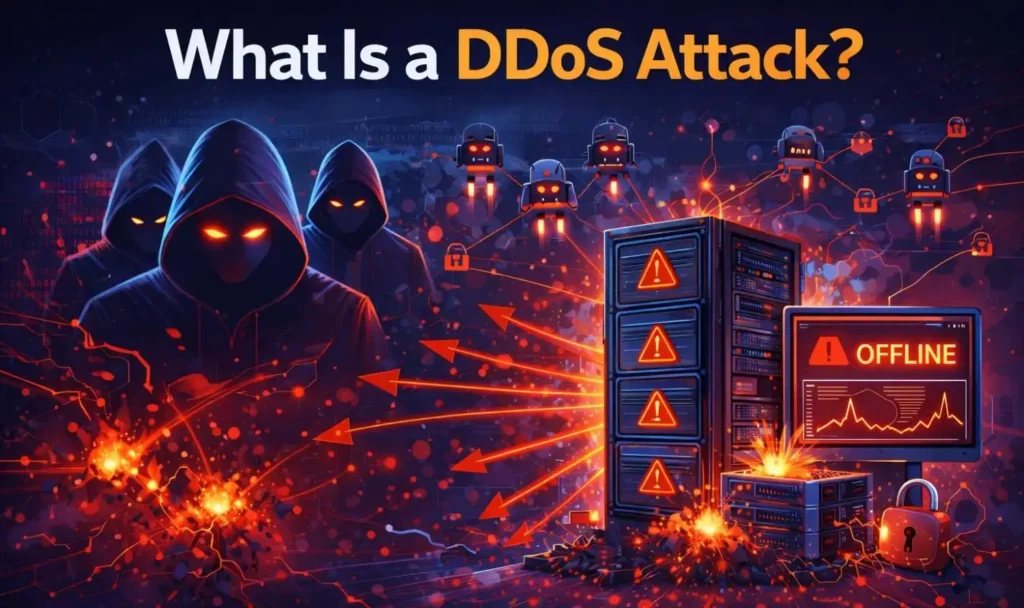
What Is a DDoS Attack ?
DDoS stands for Distributed Denial of Service. In a DDoS attack, thousands or even millions of fake requests are sent to a server at the same time. The goal is simple: overload the server so real users cannot access the website.
Unlike hacking, DDoS attacks do not steal data. Instead, they cause:
- Website downtime
- Slow loading speeds
- Server crashes
- Loss of traffic and revenue
For business websites, even a few minutes of downtime can be costly.
Why Hosting-Level DDoS Protection Is Important
Many beginners think security plugins or firewalls inside the website are enough. In reality, DDoS attacks hit before traffic even reaches your site.
That’s why DDoS protection tools for hosting are critical. These tools work at the server and network level, stopping attacks before they damage your website.
Hosting-level protection offers:
- Early attack detection
- Traffic filtering at network edge
- Automatic mitigation without manual action
How DDoS Protection Work
DDoS protection tools analyze incoming traffic in real time. They separate real users from malicious bots using advanced techniques.
Here’s how they typically work:
1. Traffic Monitoring
The system constantly monitors traffic patterns and behavior.
2. Attack Detection
If traffic suddenly spikes or shows suspicious patterns, the tool identifies it as a potential DDoS attack.
3. Traffic Filtering
Fake requests are blocked or rate-limited, while genuine visitors are allowed through.
4. Load Distribution
Traffic is spread across multiple servers to prevent overload.
This entire process happens automatically, often within seconds.
Types of DDoS Attacks Protect Against
Good hosting protection tools defend against multiple attack types:
- Volumetric attacks – Massive traffic floods
- Protocol attacks – Exploit server resources
- Application-layer attacks – Target login pages, forms, or APIs
Advanced tools handle all three layers effectively.
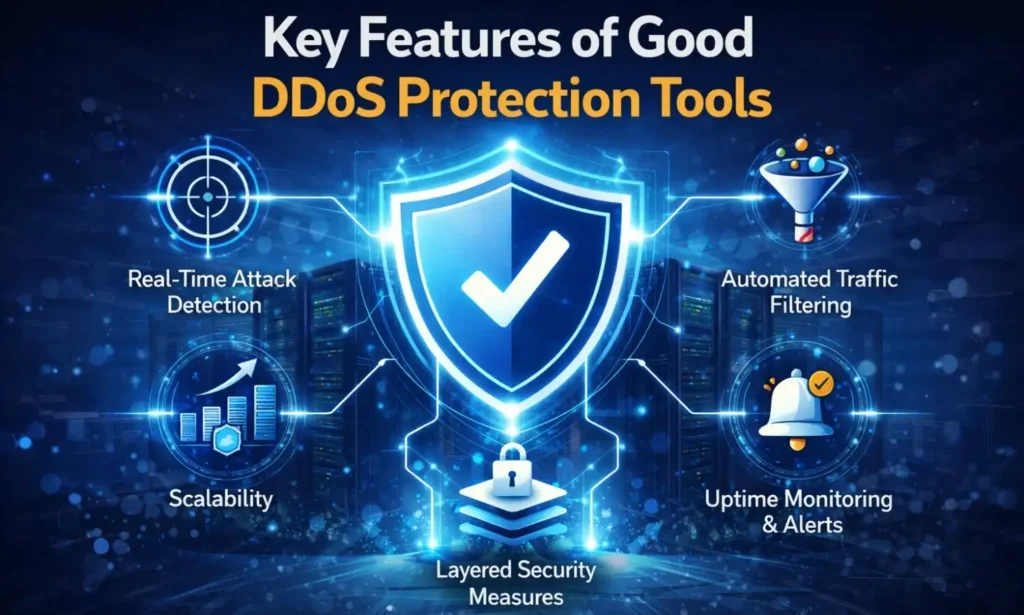
Key Features of Good DDoS Protection tools
When choosing a hosting provider or security solution, look for these features:
Real-Time Mitigation
Attacks should be blocked automatically without human intervention.
Network-Level Protection
Protection must work at the server and data center level.
Scalable Infrastructure
The system should handle sudden traffic spikes without crashing.
Traffic Rate Limiting
Prevents abuse by limiting requests from suspicious IPs.
Detailed Attack Reports
Clear logs help website owners understand what happened.
Who Needs DDoS Protection the Most?
While all websites benefit from protection, it is especially important for:
- E-commerce websites
- News and media portals
- Gaming platforms
- SaaS applications
- High-traffic blogs
Even small websites can be attacked, especially if they use shared hosting.

DDoS Protection on Shared vs Cloud Hosting
On shared hosting, a DDoS attack on one website can affect many others. That’s why shared hosting needs strong centralized protection.
On cloud hosting, DDoS protection tools work even better because:
- Traffic can be distributed dynamically
- Servers scale automatically
- Attacks are absorbed across regions
This makes cloud hosting more resilient to large-scale attacks.
Benefits of Using
Using proper DDoS protection provides long-term advantages:
- Higher website uptime
- Faster page loading during traffic spikes
- Better user experience
- Improved SEO rankings
- Stronger brand trust
Search engines prefer stable, always-online websites.
You May Like: Hosting Tools for Security
Final Thoughts
DDoS attacks are growing every year, and no website is too small to be targeted. Relying only on website-level security is risky. The safest approach is using DDoS protection tools for hosting that block attacks at the source.
If your hosting provider includes strong DDoS protection, you’re already one step ahead. If not, upgrading your hosting security should be a top priority.
A secure hosting environment means peace of mind—for you and your visitors.
FAQs :
1. What are DDoS protection tools for hosting?
They block fake traffic at the server level to prevent website downtime during attacks.
2. Is DDoS protection necessary for small websites?
Yes, even small websites can go offline from low-level DDoS attacks without protection.
3. Does web hosting include DDoS protection by default?
Some hosts offer basic protection, but advanced DDoS defense usually comes with higher plans.
4. How do DDoS protection tools improve website uptime?
They detect and stop attack traffic in real time before servers get overloaded.
5. Which hosting type is best for DDoS protection?
Cloud hosting is best because it distributes traffic across multiple servers automatically.