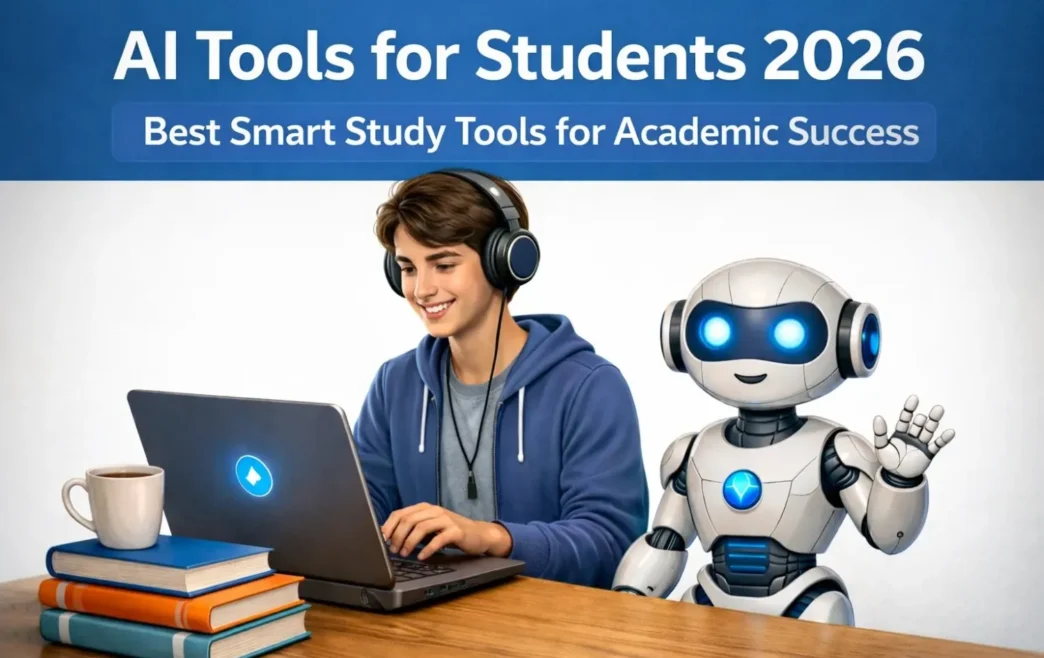
Explore the best AI Tools for Students 2026 to improve productivity, complete assignments faster, take smarter notes, and achieve better academic results with modern AI technology.
AI Tools for Students 2026: Study Smarter, Not Harder
Student life in 2026 looks very different from what it was just a few years ago. Long hours of manual note-taking, struggling with writer’s block, and spending days researching a single topic are no longer the norm. Thanks to rapid advancements in artificial intelligence, students now have access to powerful digital assistants that make learning faster, easier, and more efficient.
In this article, we’ll explore the best AI Tools for Students 2026, how they are transforming education, and how you can use them responsibly to improve your academic performance.
Why AI Tools Matter for Students in 2026
Education has become more competitive and more demanding. Students are expected to manage assignments, presentations, research projects, and exams all at once. AI tools help reduce this pressure by handling repetitive tasks and providing instant support.
The biggest advantage of AI is time efficiency. Instead of spending hours organizing notes or editing essays, students can now focus more on understanding concepts and developing critical thinking skills.
That’s exactly why AI Tools for Students 2026 are becoming essential rather than optional.

1. AI Writing Assistants
Writing essays and assignments can be challenging, especially when you don’t know how to start. AI writing assistants help generate ideas, create outlines, and even draft content that you can refine in your own words.
One of the most widely used platforms is OpenAI’s ChatGPT. It can explain difficult topics, help brainstorm ideas, and assist in structuring essays.
Another popular tool is Grammarly, which improves grammar, clarity, and tone. It is especially useful for students who want to submit polished, professional assignments.
However, these tools should be used for guidance—not for copying content directly. Always rewrite and personalize your work.
2. AI Note-Taking and Transcription Tools
Keeping up with lectures can be difficult, especially during fast-paced classes. AI-powered note-taking tools can record lectures and automatically convert speech into organized notes.
Platforms like Otter.ai allow students to transcribe lectures in real time. Meanwhile, productivity platforms such as Notion offer AI features that summarize and structure notes efficiently.
These tools help students review lessons quickly and avoid missing important points.
3. AI Research and Summarization Tools
Research projects often require reading long academic articles. AI summarization tools can condense complex information into clear, digestible points.
Instead of reading dozens of pages, students can use AI to extract key insights and focus on the most important information. This makes research more manageable and less overwhelming.
In 2026, this feature has become one of the most practical aspects of AI Tools for Students 2026, especially for university-level studies.

4. AI Presentation Makers
Creating presentations can take hours—from designing slides to organizing content. AI presentation tools now generate complete slide decks based on a single topic.
For example, Canva offers AI-powered design suggestions that automatically create visually appealing slides. Students can then customize them according to their needs.
This saves time and ensures professional-quality results even if you are not skilled in design.
5. AI Language Learning Tools
Students learning a new language can benefit greatly from AI-driven platforms. Apps like Duolingo use AI to personalize lessons and adapt to individual learning speeds.
AI conversation tools also allow students to practice speaking skills and receive instant feedback. This makes language learning more interactive and engaging.
Responsible Use of AI in Education
While AI tools are powerful, they should not replace genuine learning. Relying entirely on AI can weaken critical thinking and creativity.
Here are a few smart practices:
- Use AI for brainstorming, not copying.
- Verify facts before submitting assignments.
- Rewrite AI-generated suggestions in your own words.
- Follow your school or university’s academic policies.
When used responsibly, AI becomes a supportive learning partner rather than a shortcut.

The Future of Student Learning
The role of AI in education will continue to grow. We may soon see personal AI tutors that adapt to each student’s strengths and weaknesses. Study planners, automated revision systems, and intelligent feedback tools will become even more advanced.
Students who learn how to use these technologies wisely will have a clear advantage in both academics and future careers.
Know more About : The 5 Most Powerful AI Content Creation Tools
Conclusion
The rise of AI Tools for Students 2026 marks a major shift in how students approach education. These tools save time, reduce stress, and improve productivity. From writing assistance to research support and language learning, AI is reshaping the academic experience.
However, success still depends on how you use these tools. Combine AI efficiency with your own effort and understanding, and you will not just study harder—you will study smarter.
FAQ – AI Tools for Students
1. What are the best AI Tools for Students in 2026?
The best AI Tools for Students include writing assistants, AI note-taking apps, research summarizers, presentation makers, and language learning platforms that improve productivity and save time.
2. How do AI Tools for Students improve academic performance?
AI Tools for Students help organize notes, generate ideas, summarize long research papers, and enhance writing quality, allowing students to focus on understanding concepts.
3. Are AI Tools for Students allowed in schools and universities?
Most institutions allow AI Tools for Students for research and guidance, but students must follow academic policies and avoid copying content directly.
4. Can AI Tools for Students replace traditional studying?
No, AI Tools for Students support learning but cannot replace critical thinking, creativity, and personal effort.
5. Are AI Tools for Students useful for language learning?
Yes, many AI Tools for Students personalize lessons, provide instant feedback, and help improve speaking, writing, and vocabulary skills.