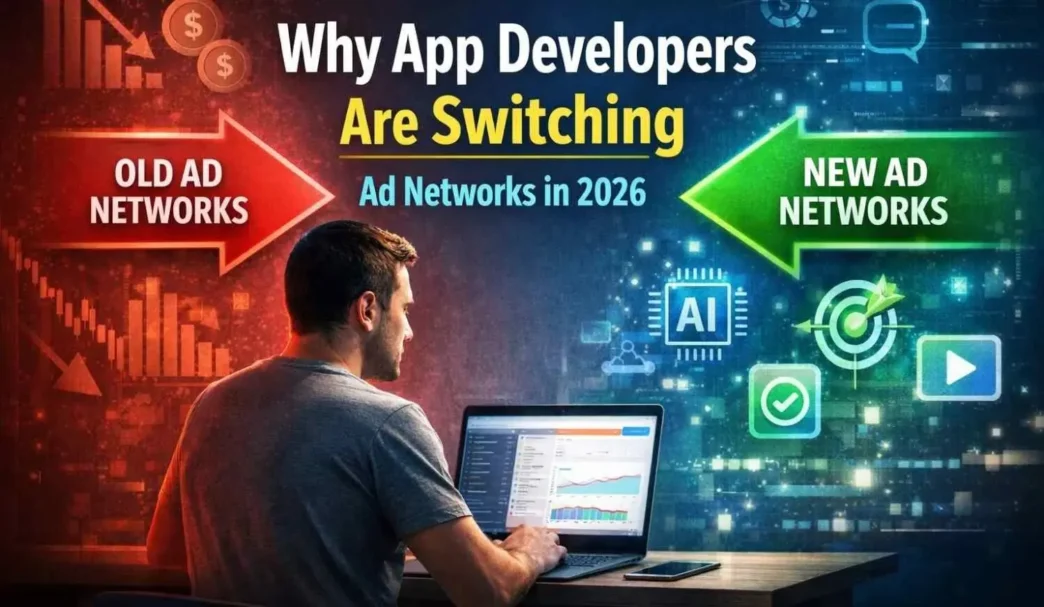
App developers are switching ad networks in 2026 due to low ROI, AI-driven monetization, privacy changes, and better ad mediation platforms. Here’s the complete analysis.
If you are closely connected to the mobile app industry, you might have already noticed a silent but powerful change happening behind the scenes. App developers are switching ad networks in 2026, and this trend is growing faster than ever before.
This is not a random move or a short-term experiment. It is a strategic shift driven by revenue pressure, user behavior changes, privacy regulations, and the rapid evolution of AI-powered advertising.
In this article, we will break down why app developers are switching ad networks in 2026, what problems they are trying to solve, and how this shift is reshaping the future of app monetization.
1. Traditional Ad Networks Are No Longer Delivering Strong ROI
For years, many developers relied on the same ad networks without questioning performance. But in 2026, this mindset has completely changed.
The biggest reason app developers are switching ad networks in 2026 is declining return on investment (ROI).
Many networks still generate impressions, but:
- eCPM is unstable
- Fill rate is inconsistent
- High impressions don’t always mean high revenue
Developers are no longer impressed by big dashboards. What they want is actual revenue growth, not vanity metrics.
If an ad network cannot prove consistent earnings, developers now replace it without hesitation.
2. User Experience Is Becoming a Top Priority
In earlier years, aggressive ads were tolerated. But in 2026, user patience is extremely low.
Apps filled with:
- Unskippable video ads
- Poorly optimized interstitials
- Repetitive creatives
are seeing higher uninstall rates.
This is another major reason app developers are switching ad networks in 2026. Developers are now choosing networks that:
- Offer user-friendly ad formats
- Reduce ad fatigue
- Maintain smooth app performance
A good user experience directly impacts retention, reviews, and long-term revenue. Developers understand this clearly now.
3. AI-Driven Ad Optimization Is Changing the Game
Artificial Intelligence is no longer optional in ad tech.
Modern ad networks now use AI to:
- Predict high-value users
- Optimize ad frequency
- Adjust bidding in real time
Older networks that lack smart optimization tools are slowly becoming irrelevant.
That’s why app developers are switching ad networks in 2026 toward platforms that use advanced machine learning and automation.
AI helps developers earn more without increasing ad pressure, which is a massive advantage.Google’s official developer documentation explains how privacy changes are impacting mobile ads.
4. Privacy Rules Are Forcing Developers to Adapt
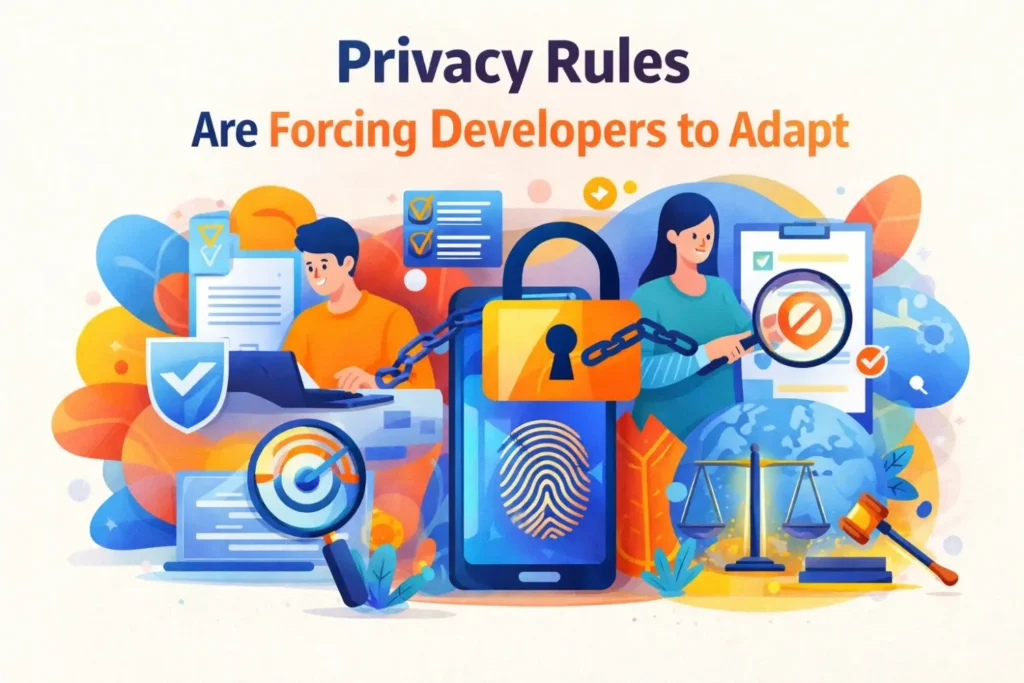
Privacy changes introduced by platforms like Apple and Google have reshaped mobile advertising.
Tracking limitations, consent requirements, and data restrictions mean:
- Old targeting methods no longer work
- Attribution is harder
- Performance drops if networks fail to adapt
Because of this, app developers are switching ad networks in 2026 to privacy-first platforms that:
- Work efficiently without invasive tracking
- Provide transparent reporting
- Follow global compliance standards
Privacy-ready monetization is now a survival requirement, not a feature.
5. Ad Mediation Platforms Make Switching Easier Than Ever
One big reason this trend is accelerating is ad mediation.
With mediation platforms, developers can:
- Test multiple ad networks simultaneously
- Remove underperforming networks instantly
- Automatically prioritize high-paying ads
This flexibility encourages experimentation.
Since switching is no longer risky or expensive, app developers are switching ad networks in 2026 more frequently to maximize revenue.
Mediation has removed emotional attachment from monetization decisions. Everything is now performance-based.
6. New Ad Formats Are Attracting Developer Attention
Banner ads alone cannot sustain revenue anymore.
In 2026, developers prefer:
- Rewarded video ads
- Playable ads
- Native in-app placements
Some ad networks fail to innovate, while others actively support new formats that increase engagement.
This innovation gap is another reason app developers are switching ad networks in 2026. Developers want partners that evolve with user behavior, not platforms stuck in the past.
7. Developers Are Thinking Long-Term, Not Short-Term
Earlier, many developers focused only on quick payouts. But now, the mindset has matured.
Today’s developers look for:
- Stable monthly earnings
- Scalable monetization
- Reliable support and transparency
Ad networks that delay payments, lack communication, or hide data are quickly replaced.
This long-term thinking explains why app developers are switching ad networks in 2026 with more confidence than ever before.
8. Competition Forces Smarter Monetization Choices
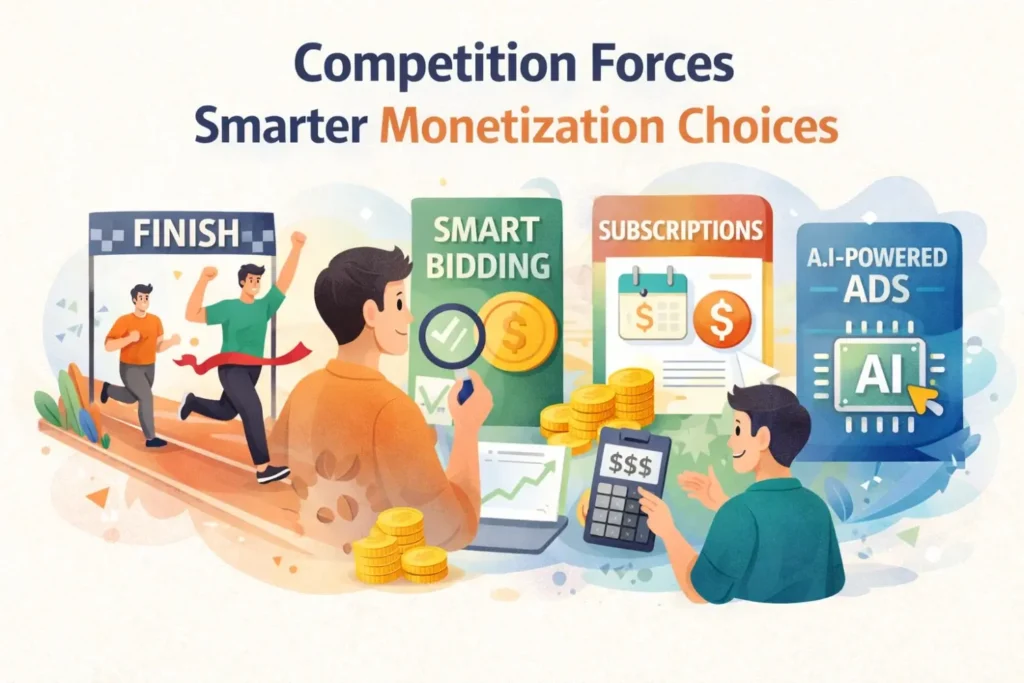
The app market is overcrowded. Millions of apps compete for the same users.
In such an environment, inefficient monetization can kill an app faster than bad design.
Developers now treat monetization as a core growth strategy, not an afterthought.
That is why app developers are switching ad networks in 2026 to gain even a small performance edge over competitors.
You May Like : These 5 Hosting Tools Are Taking Over Websites in 2026
Final Thoughts: This Shift Is Just the Beginning
The reality is clear — app developers are switching ad networks in 2026 because the ecosystem demands smarter, cleaner, and more profitable monetization.
This shift is not temporary.
It represents a new era where:
- Data beats assumptions
- User experience beats aggressive ads
- Performance beats brand loyalty
Developers who adapt early will survive and grow. Those who ignore these changes risk falling behind.
In 2026, switching ad networks is no longer a risk — staying with the wrong one is.